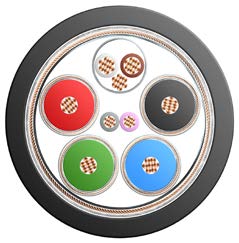
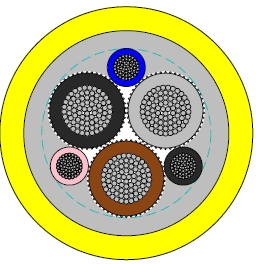
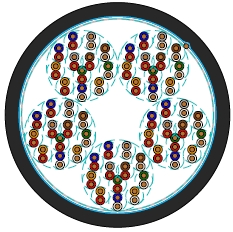
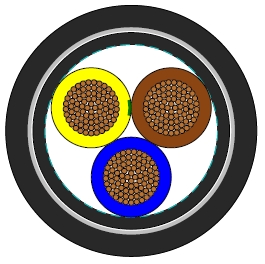
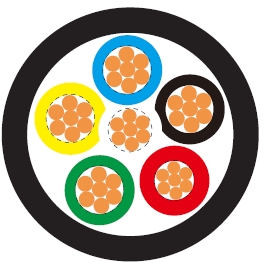
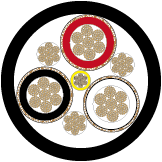
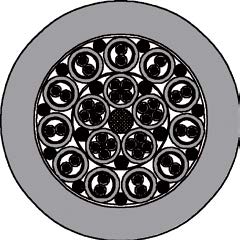
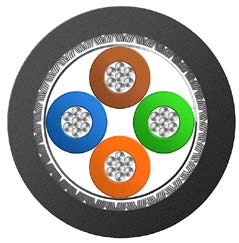
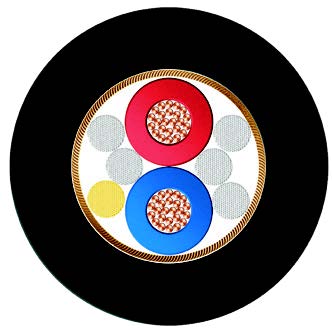
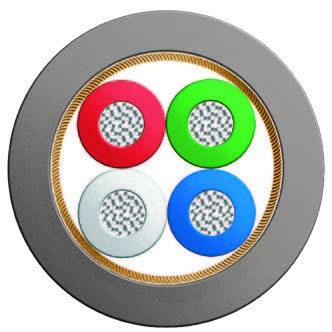
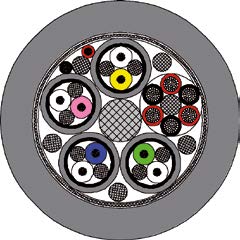
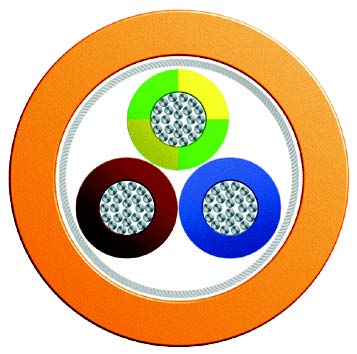
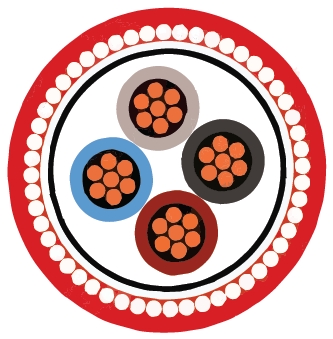
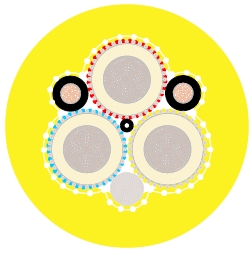
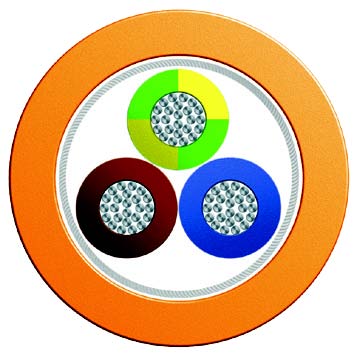
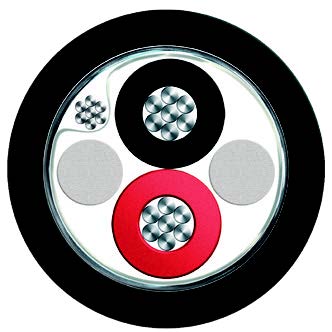
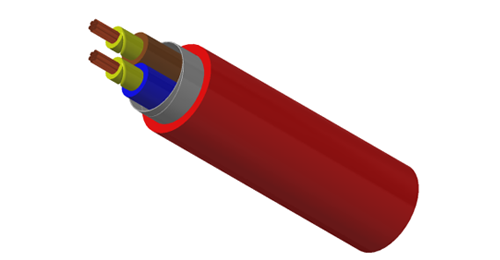
ZCO3 connects signalling equipment between control centres and trackside shelters on AC-electrified high-speed railway lines. Four PE-insulated solid copper conductors form each quad. The assembly includes corrugated copper tape, an intermediate sheath and double steel tapes for the specified screening construction. ZCO3 uses the PE/PVC sheath arrangement, with ZCO3-SH identifying an LSZH option. The dimension schedule lists two-quad and four-quad versions.
SNCF CT 445
NF F 55-698
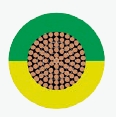
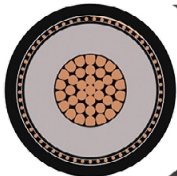
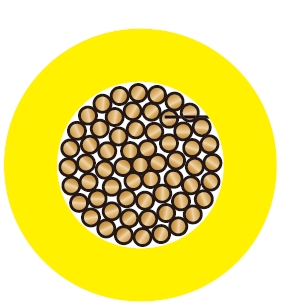
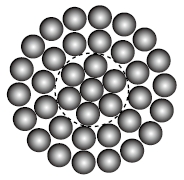
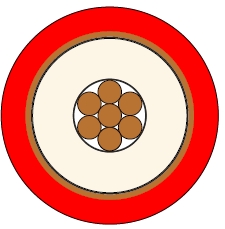
Conductors : Solid annealed copper, 1.0 mm² nominal cross section area.
Insulation : Solid polyethylene.
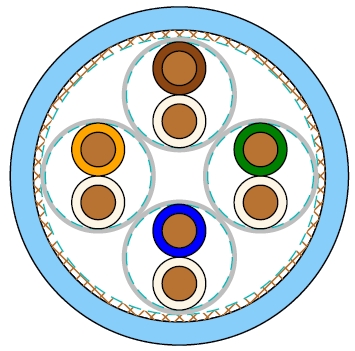
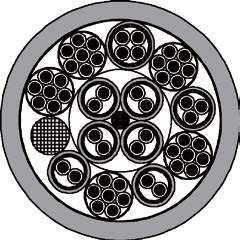
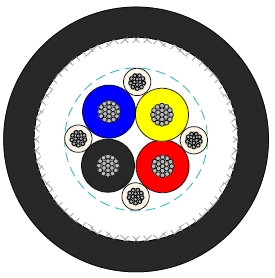
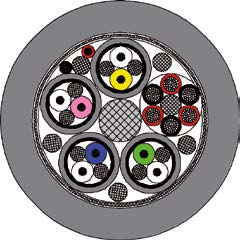
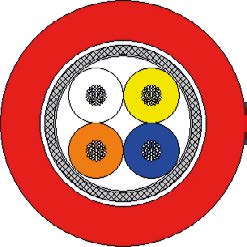
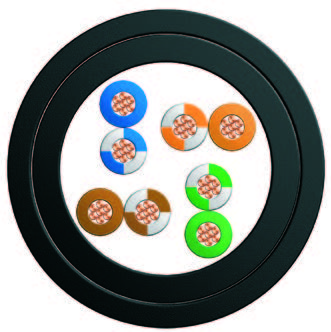
Cabling Element : Four conductors are twisted to form a quad.
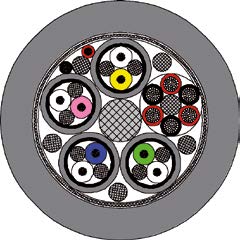
Stranding : Quads are helically stranded to get the cable core.
Core Wrapping : Plastic tape(s) with overlapping.
Inner Sheath : Low density polyethylene. LSZH FR option can be offered upon request to NF C 32 070.2.2 (C1).
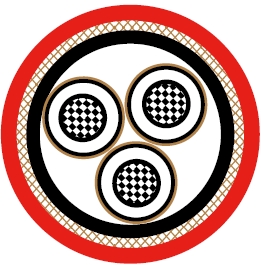
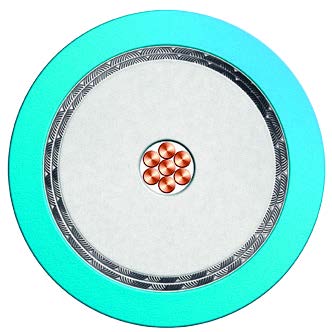
Electrostatic Shield : Corrugated copper tape.
Intermediate Sheath : Low density polyethylene. LSZH FR option can be offered upon request to NF C 32 070.2.2 (C1).
Electromagnetic Shield : Two helically applied steel tapes (0.5mm).
Outer Sheath : PE/PVC compound. LSZH FR option can be offered upon request to NF C 32 070.2.2 (C1).
Remarks : ZCO3 : PE/PVC Sheath ; ZCO3-SH : LSZH Sheath.
| Nominal Conductor Diameter | mm | 1.13 |
| Nominal Cross Section Area | mm² | 1.0 |
| Maximum Conductor Resistance (DC) | Ω/km | 18.1 |
| Minimum Insulation Resistance @500 V DC (3mins) | MΩ.km | 5000 |
| Maximum Mutual Capacitance @1000Hz (AC) | nF/km | 40 |
| Maximum Capacitance Unbalance @800Hz | pF/500m | 400 |
| Dielectric Strength, conductor to conductor (DC voltage 3mins) | V | 4500 |
| Operating Voltage AC/DC | V | 450/750 |
| Inductive voltage(V/km) | 50 | 70 | 100 | 370 | 400 | 470 |
| Reduction factor @50Hz | 0.42 | 0.30 | 0.20 | 0.16 | 0.18 | 0.31 |
Minimum Bending Radius : 8×OD (static) ; 16×OD (dynamic)
Temperature Range : -40℃ to +70℃ (during operation) ; -20℃ to +50℃ (during installation)
| Cable Code | No. of Quads | Nominal Sheath Thickness | Nominal Overall Diameter | Nominal Weight | ||
|---|---|---|---|---|---|---|
| Inner | Interm. | Outer | ||||
| mm | mm | mm | mm | kg/km | ||
| 1.13mm Conductor, 2.33 Insulated Wire | ||||||
| BRAIL ZCO3-2Y2Y(K)2YB2Y-2Q1S | 2 | 0.8 | 1.0 | 1.6 | 27.0 | 1295 |
| BRAIL ZCO3-2Y2Y(K)2YB2Y-4Q1S | 4 | 0.8 | 1.0 | 1.6 | 29.5 | 1490 |
1.0 mm² solid copper conductors assembled into quads.
Corrugated copper tape screen plus two 0.5 mm steel tapes.
Separate reduction-factor, electrical and dimensional tables for route selection.
Match quad count, sheath arrangement and circuit requirements before checking the induction assessment. Use the reduction-factor table at its stated 50 Hz conditions and account for the route’s bonding design. The listed operating voltage is 450/750 V AC/DC; the 25 kV traction environment does not change that cable rating. Plan bend space from the diameter of the selected construction.
What distinguishes a quad from a pair?
A quad contains four conductors twisted together. This ZCO3 construction uses quads, while ZPAU uses twisted pairs.
Which quad counts are listed?
The dimension table gives two-quad and four-quad constructions with 1.0 mm² conductors.
What does ZCO3-SH mean?
It identifies the LSZH sheath option. State the complete sheath arrangement and required fire-performance documents in the order.
Can one reduction-factor value describe every route?
Use the value at the applicable inductive voltage and frequency, then assess it with the route and termination design.
Which information is needed to select the cable?
Provide quad count, sheath option, lengths, signalling-circuit voltage, induction requirements and the applicable railway specification.